

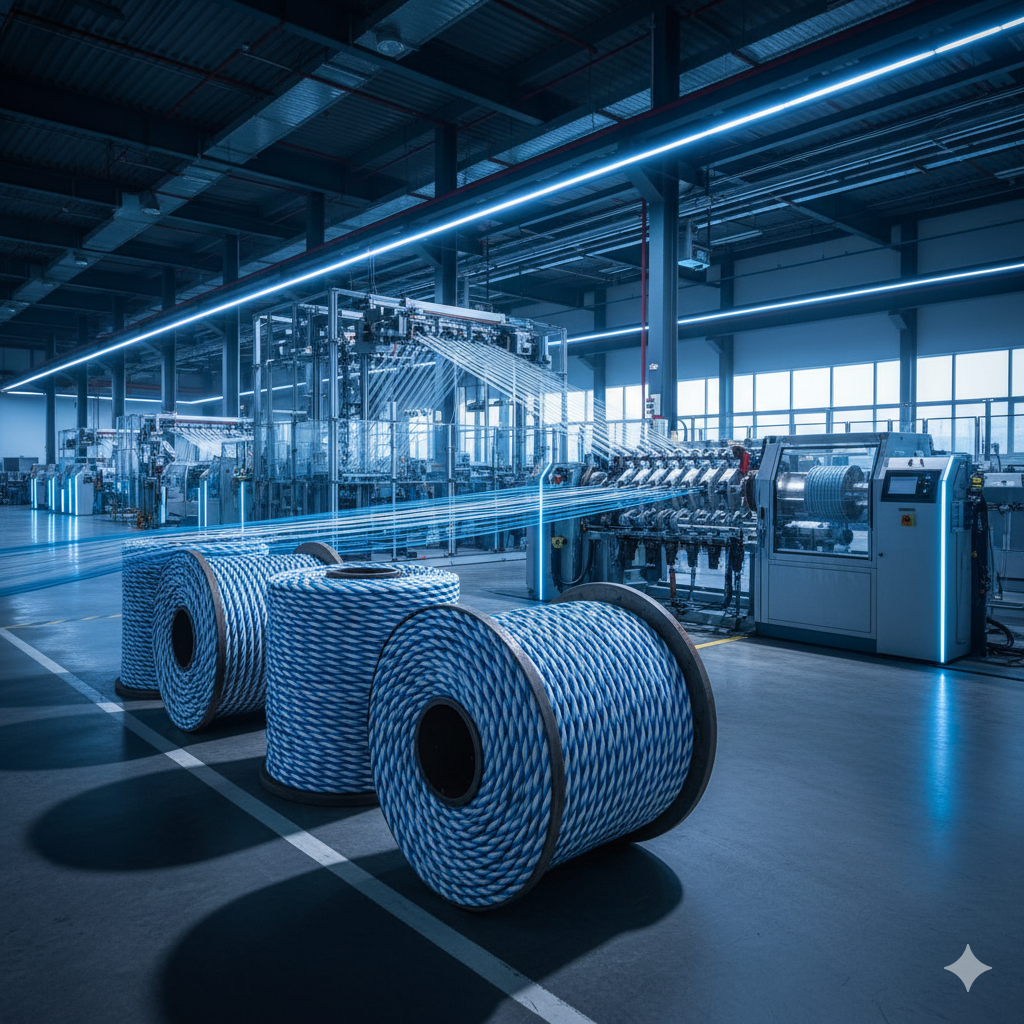
Plastic ropes are widely used across industries due to their strength, durability, and versatility. But have you ever wondered how these ropes are actually made? Understanding the manufacturing process not only builds trust but also helps buyers choose the right quality product for their needs.
In this blog, we’ll walk you through the complete journey of plastic rope production—from raw materials to the final product.
1. Raw Materials Used in Plastic Rope Manufacturing
The process begins with selecting high-quality raw materials. The most commonly used plastics include:
- Polypropylene (PP): Lightweight, strong, and resistant to chemicals
- High-Density Polyethylene (HDPE): Durable and ideal for outdoor use
- Nylon: Known for high strength and elasticity
These materials are usually available in the form of small granules or pellets, which are easy to process.
2. Extrusion Process: Creating Plastic Fibers
The raw plastic granules are fed into an extrusion machine, where they are heated at high temperatures until they melt.
- The molten plastic is then pushed through a die (a specially designed mold)
- This forms thin strands or filaments
- These strands are cooled immediately using water or air
👉 At this stage, the rope begins to take shape as long, continuous fibers.
3. Stretching and Strengthening
After extrusion, the fibers go through a stretching process.
- Fibers are stretched to align the molecules
- This increases their tensile strength
- It also improves durability and flexibility
👉 This step is crucial because it determines how strong the final rope will be.
4. Twisting and Braiding the Rope
Now comes the transformation from fibers to rope.
- Multiple strands are twisted together
- Depending on the requirement, ropes can be:
- Twisted ropes (common and cost-effective)
- Braided ropes (stronger and more flexible)
👉 The number of strands and the twisting pattern affect the rope’s strength and usage.
5. Coloring and Finishing
Plastic ropes can be customized in different colors and finishes.
- Color pigments are added during the extrusion stage
- UV stabilizers may be included for outdoor durability
- Additional coatings can enhance resistance to water and chemicals
👉 This makes ropes suitable for specific industries like marine, agriculture, and construction.
6. Quality Testing
Before reaching customers, ropes undergo strict quality checks:
- Tensile strength testing (how much weight it can تحمل)
- Abrasion resistance tests
- UV and weather resistance checks
👉 This ensures safety, reliability, and long-lasting performance.
7. Packaging and Distribution
Finally, the ropes are:
- Wound into coils or spools
- Packed securely for transportation
- Distributed to wholesalers, retailers, or direct customers
Why Quality Manufacturing Matters
High-quality plastic rope manufacturing ensures:
- Longer lifespan
- Better load-bearing capacity
- Resistance to harsh environments
- Cost-effectiveness in the long run
Choosing a trusted manufacturer guarantees consistent quality and performance.
Conclusion
From tiny plastic granules to strong, durable ropes, the manufacturing process involves precision, technology, and strict quality control. Whether used in agriculture, marine work, construction, or daily tasks, plastic ropes play an essential role in countless industries.
If you’re looking for reliable and high-quality plastic ropes, always consider the manufacturing process—it’s the key to performance and safety.