

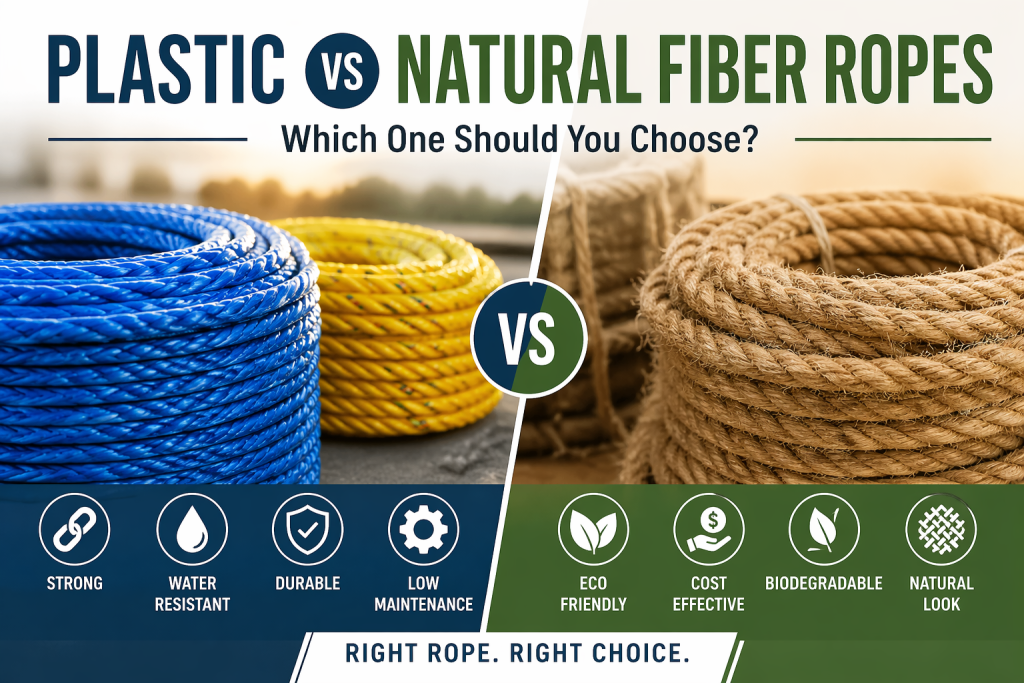
When choosing the right rope for your needs, one common question arises: Should you go for plastic (synthetic) ropes or natural fiber ropes?
Both options have their advantages and limitations, and the right choice depends on your specific use case. In this blog, we’ll break down the key differences to help you make an informed decision.
1. What Are Plastic (Synthetic) Ropes?
Plastic ropes are made from man-made materials such as:
- Polypropylene (PP)
- High-Density Polyethylene (HDPE)
- Nylon
These ropes are engineered for strength, durability, and resistance to environmental conditions.
👉 Common uses: Marine, agriculture, construction, industrial applications
2. What Are Natural Fiber Ropes?
Natural ropes are made from plant-based materials like:
- Jute
- Coir (coconut fiber)
- Cotton
- Hemp
They are biodegradable and eco-friendly but generally less durable.
👉 Common uses: Decoration, handicrafts, gardening, light-duty work
3. Strength and Durability
- Plastic ropes:
- High tensile strength
- Can handle heavy loads
- Long lifespan
- Natural ropes:
- Lower strength
- Prone to wear and tear
- Shorter lifespan
👉 Winner: Plastic ropes for heavy-duty use
4. Water and Weather Resistance
- Plastic ropes:
- Water-resistant or waterproof
- Do not rot or grow mold
- Suitable for outdoor and marine environments
- Natural ropes:
- Absorb water
- Can rot or weaken over time
- Not ideal for long-term outdoor use
👉 Winner: Plastic ropes for outdoor and marine use
5. Cost and Maintenance
- Plastic ropes:
- Slightly higher initial cost (depending on type)
- Low maintenance
- Long-term cost-effective
- Natural ropes:
- Usually cheaper upfront
- Require more care
- Need frequent replacement
👉 Winner: Plastic ropes for long-term value
6. Environmental Impact
- Plastic ropes:
- Not biodegradable
- Can be recycled (depending on material)
- Natural ropes:
- Biodegradable
- Environmentally friendly
👉 Winner: Natural ropes for eco-friendliness
7. Flexibility and Handling
- Plastic ropes:
- Smooth and flexible
- Easy to handle
- Some types may slip
- Natural ropes:
- Better grip
- Rough texture
- Less flexible
👉 Winner: Depends on use (grip vs flexibility)
Final Comparison Table
| Feature | Plastic Ropes | Natural Fiber Ropes |
|---|---|---|
| Strength | High | Moderate/Low |
| Water Resistance | Excellent | Poor |
| Durability | Long-lasting | Short lifespan |
| Maintenance | Low | High |
| Eco-Friendliness | Moderate | High |
| Cost Efficiency | High (long-term) | Low (short-term) |
Conclusion: Which One Should You Choose?
- Choose plastic ropes if you need:
- Strength and durability
- Outdoor or marine performance
- Long-term cost savings
- Choose natural fiber ropes if you need:
- Eco-friendly materials
- Decorative or light-duty applications
Final Thought
The right rope depends on your purpose. For most industrial and heavy-duty applications, plastic ropes are the smarter and more reliable choice. However, natural ropes still hold value where sustainability and aesthetics matter.